Vertical packaging machines have revolutionized product packaging across industries and offer unparalleled speed, precision, and versatility. This comprehensive guide combines over 15 years of experience in packaging technology with current market data to help you select, price, and optimize vertical form, fill, and seal (VFFS) machines. Discover how these systems can reduce your packaging costs by 30–60% while doubling production output.
What exactly is a vertical form-fill-seal machine?
A vertical packaging machine, often referred to as a vertical form, fill, and seal (VFFS) machine, is a masterpiece of modern technology. VFFS machines are automated systems designed to package products by forming a pouch, filling it with the product, and sealing it—all in a vertical configuration. These machines have become the preferred choice in many industries due to their efficiency and ability to process a variety of products, including solids, powders, liquids, and granules.
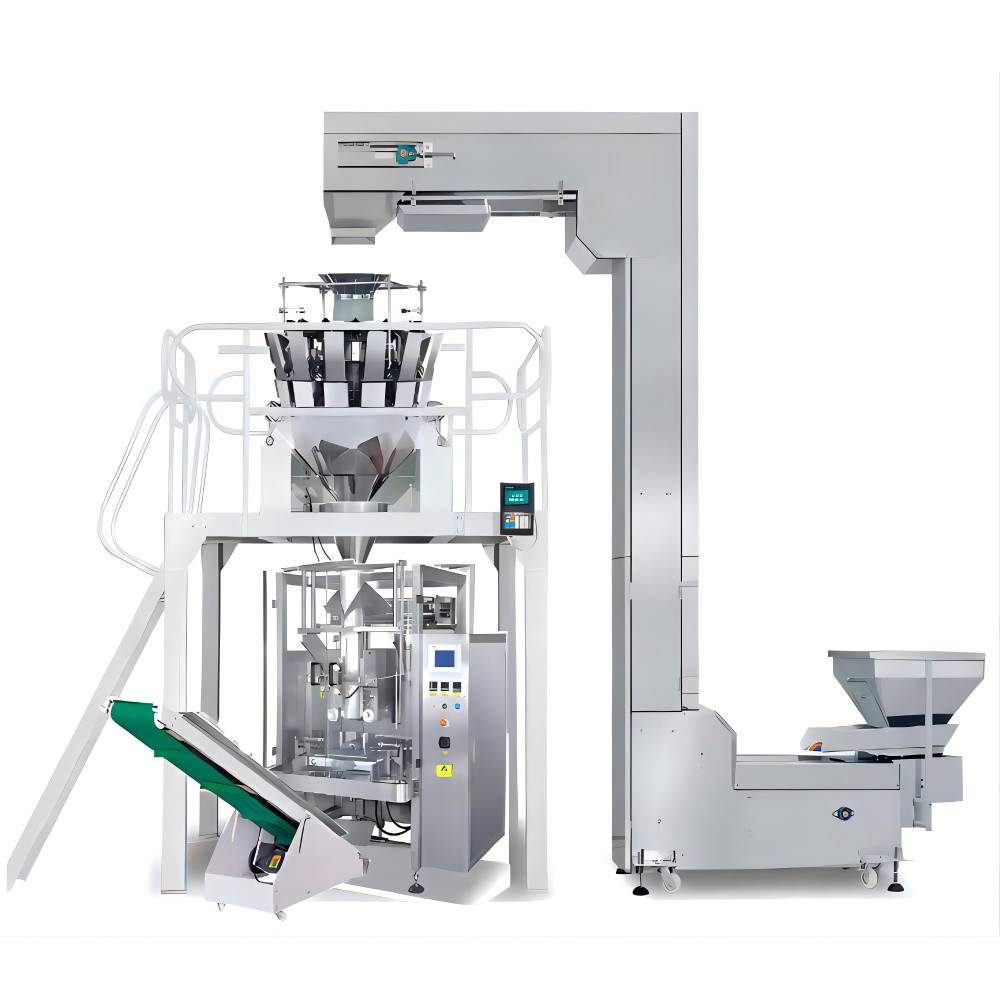
The process begins by unwinding a roll of packaging film, which is formed into a tube. This tube is then filled with the product and sealed horizontally at both ends. Depending on the machine’s capacity, speeds ranging from 40 to 200 bags per minute can be achieved. By purchasing a VFFS machine, you’ll benefit from the following three advantages:
- 99.9% Seal Integrity
- ±0.5% Weight Accuracy
- Increased productivity: 3 times faster than semi-automatic systems
How does a vertical packaging machine work?
Essentially, a vertical packaging machine takes a flat roll of packaging film, forms it into a bag, fills it with your product (whether it’s chips, candy, coffee, or even hardware), and then seals the bag shut—all in a continuous, vertical motion. It’s like a packaging superhero!
The three most important steps for vertical packaging machines:
- Education: The film is unwound from a roll and formed into a tube using a forming sleeve.
- Filling: The product is precisely measured and dispensed into the tube.
- Sealing: Heated jaws create horizontal seals to secure the packaging, which is then cut into individual bags.
Vertical machines are ideal for packaging snacks, pharmaceuticals, powders, and more. Their efficiency in producing large quantities of high-quality packaging makes them a popular choice in production lines around the world.
Price Breakdown for Vertical Machines: What Do You Get for Your Money?
Vertical form-fill-seal machines are available at various price points, with each tier offering different features, capabilities, and production speeds. Here’s a comparison of the pricing and what you can expect in return for your investment.
| Component | Base Model ($18k) | Mid-range model ($45k) | Premium Model ($85k+) |
|---|---|---|---|
| Frame Material | Mild steel | Stainless steel | Surgical-grade SS |
| Drive System | Pneumatic | Hybrid Servo | Full servo |
| Seal Type | Localized heat | Dual Temperature | Impulse + Cool |
| Tax Interface | PLC Basics | Touchscreen HMI | IoT-enabled |
| Changeover time | 45 minutes | 15 minutes | <5 minutes |
| Energy Consumption | 5 kW/hour | 3.2 kW/hour | 2.1 kW/hour |
The table shows how machine prices are influenced by the complexity and technical sophistication of the equipment. The premium model, for example, features advanced sealing technologies, energy efficiency, and shorter changeover times—ideal for high-volume production.
Sample: One of the snack manufacturers that purchased our mid-range machine was able to reduce its labor costs for packaging from 148.200 TP2T per month to 141,900 TP2T per month, thereby recouping the investment of 145,200 TP2T within 7 months.
How does vertical packaging compare to horizontal packaging?
When selecting packaging systems, it is crucial to understand the differences between vertical and horizontal machines. Both systems have their advantages, but VFFS machines are often superior to their horizontal counterparts in certain scenarios.
Key differences between vertical and horizontal systems:
- Orientation: HFFS machines operate horizontally, while VFFS machines operate vertically.
- Product Type: HFFS machines are typically used to package solid products such as cookies, crackers, and confectionery, while VFFS machines are more versatile and can handle a wider range of products, including granular materials, liquids, and powders.
- Speed: HFFS machines generally operate at higher speeds than VFFS machines.
- Footprint: VFFS machines generally require less floor space than HFFS machines and are therefore a good choice for facilities with limited space.
- Costs: VFFS machines are usually less expensive than HFFS machines.
The choice between HFFS and VFFS machines depends on your specific packaging needs and product type. If you’re packaging solid products at high speeds, HFFS may be the better option. If you need a versatile machine that can handle a wide range of products and have limited space, VFFS may be the right choice.
What are the main features of vertical form-fill-seal machines?
Understanding the key features of vertical form-fill-seal machines will help you make the right choice for your production line. The most important factors to consider are the level of automation, sealing technology, and energy efficiency.
Key Features of VFFS Machines:
- Automation: Higher-end models feature servo-controlled automation, which reduces the need for manual adjustments and enables faster changeovers.
- Sealing Systems: Some VFFS machines offer advanced sealing systems, such as pulse and refrigerated sealing, which ensure greater seal integrity and less waste.
- Energy Efficiency: Look for machines that use energy-saving technologies, such as servo motors, to reduce total cost of ownership.
| Specifications | Value |
|---|---|
| Production Speed | 50–120 ppm |
| Range of bag sizes | 50–300 mm (width), 50–400 mm (length) |
| Film width range | 150–600 mm |
| Seal Type | Heat Sealing |
| Energy Intake | 3–5 kW |
| Air consumption | 0.6–0.8 MPa |
Using these specifications, you can compare different machines and determine which one best meets your specific needs.
Which industries benefit the most from vertical packaging solutions?
Top adopters according to PMMI’s 2023 report:
Food & Beverage (38% Market Share)
- Coffee beans
- Pet Food
- Powdered beverages
Pharmaceuticals (27%)
- Medical Device Kits
- Tablet strips
- Bag of IV solution
Chemicals (19%)
- Fertilizer
- Pool salts
- Industrial Powders
New Applications:
- CBD products that require nitrogen flushing
- Meal kits with modified-atmosphere packaging
How to Choose the Right Vertical Packaging Machine for Your Industry
Every industry has its own set of requirements when it comes to packaging. Whether you’re in the food, pharmaceutical, or chemical industries, choosing the right vertical packaging machine is crucial to ensuring that the machine meets your operational needs.
Industry-Specific Considerations:
- Food Industry: The machines must be capable of processing food-grade films while ensuring hygiene and compliance with health standards.
- Pharmaceuticals: To ensure product integrity, machines must comply with strict regulations such as ISO 14644-1 Class 8 certification.
- Chemicals: VFFS machines in this sector must process products such as fertilizers or industrial powders, which may have specific packaging requirements.
Choosing the right VFFS machine manufacturer is a crucial decision that can significantly impact your packaging operations. With so many options available, it’s important to do your research and choose a partner that aligns with your specific needs and goals.
Experience and Expertise: Look for a manufacturer with a proven track record in the development and production of reliable VFFS machines. Review their industry experience, customer references, and case studies to get a sense of their capabilities.
Product Line: Choose a manufacturer that offers a range of VFFS machine models that meet your specific product types and packaging requirements.
Customization options: If you have specific packaging requirements, look for a manufacturer that offers customization options to tailor the machine to your specific needs.
Service and Support: Make sure the manufacturer offers comprehensive service and support, including installation, training, maintenance, and troubleshooting.
Price and Value: While price is an important factor, don’t base your decision solely on cost. Focus on finding a manufacturer that offers the best value for your money, taking into account factors such as quality, reliability, and support.
Don't be afraid to ask questions and request references. Talking to other customers can provide valuable insights into the manufacturer’s performance and customer service.
What hidden costs should you watch out for when buying a VFFS machine?
While the initial cost of a VFFS machine is certainly important, you should also consider the hidden costs that may arise throughout the machine’s entire life cycle. These costs can quickly add up and impact your bottom line.
Hidden costs to consider:
- Maintenance and Parts Replacement: Over time, parts such as sealing jaws and film rolls may need to be replaced, which increases ongoing maintenance costs.
- Energy costs: Machines with higher energy consumption can increase electricity bills, especially in high-power environments.
- Education: To ensure optimal machine performance, proper training of operators is crucial; however, this may involve additional costs.
By planning for these costs in advance, you can avoid surprises and ensure that your packaging process runs smoothly.
Manufacturers of vertical form, fill, and seal machines: Who should you buy from?
Choosing the right manufacturer is essential for ensuring the quality, reliability, and support of your VFFS machine. Here’s a look at the difference between OEMs and local suppliers.
OEMs vs. Local Suppliers:
- OEMs (Original Equipment Manufacturers): They offer cutting-edge technology and long-term support, but are often more expensive.
- Local suppliers: While you may offer competitive prices and possibly faster support, you may also offer less advanced technology and fewer features.
Ultimately, the choice between OEMs and local suppliers depends on your specific needs, including budget, support, and technological requirements.
What are the latest trends in vertical packaging machines?
The packaging industry is constantly evolving, with new trends driving innovation. Here are some key trends that are shaping the future of VFFS machines.
- Predictive Maintenance: With the help of IoT sensors, manufacturers can minimize downtime through predictive maintenance by identifying issues before they turn into major problems.
- AI-powered image processing systems: AI systems can now detect sealing defects and ensure product quality without manual inspection.
- Sustainable Packaging: In light of growing environmental awareness, more and more manufacturers are investing in biodegradable films and eco-friendly packaging options.
These trends suggest that the future of vertical packaging will be shaped by smart technologies that improve both efficiency and sustainability.
Further Reading:







 English
  German